
Local Area Guides
The Cheniston Edit: The Cheniston Edit: An honest Guide to kensington
Most guides to Kensington lead with the palace. We’d rather lead with the more unlikely fact: Cheniston Gardens, the quiet residential street The Cheniston sits on, was originally built on land once owned by Sir Isaac Newton. It’s the kind of historical footnote that means nothing and somehow makes the street feel different to walk down once you know it. Here’s the rest of the area, the parts that matter and the parts that are just nice to know.
Where the name comes from
“Cheniston” is an old form of the place-name tied to the manor of Kensington — a small trace of the area’s life as a rural village long before it was absorbed into 19th-century London. The grand stuccofronted terraces that define Kensington today, including the Victorian buildings on Cheniston Gardens itself, were largely built in that midto-late 19th century wave, as the village turned into one of the city’s most fashionable addresses. That shift had a clear trigger: in 1689, William III and Mary II bought Kensington Palace — then called Nottingham House — and made it their main residence. The aristocracy followed the monarchy, and Kensington’s reputation as a desirable place to live has more or less held since.

The honest version of the shopping street
Kensington High Street is genuinely good — a mix of high street names, independent boutiques, and a Whole Foods Market three minutes from Cheniston Gardens. What most visitors miss is the Derry & Toms rooftop garden, created in 1938 above what’s now Kensington High Street’s most recognisable stretch of shopfronts — a quietly spectacular hidden landmark that doesn’t get nearly enough attention next to the bigger department-store history of the street (Barkers being the other name worth knowing).
If you want a bigger shopping run, Westfield London is a short tube ride away. But for day-to-day, the High Street covers almost everything, and it’s the two-minute version, not the half-hour one.
High street names, independent boutiques, and the old Barkers building (now Whole Foods Market) all on one stretch — the two-minute version of shopping, not the half-day one.
View on map →One of Europe’s largest shopping centres, a quick hop from High Street Kensington. The one to pick when the High Street isn’t quite enough.
View on map →
The palace, the park, and the parts people skip
Kensington Gardens and Kensington Palace are an eight-minute walk and remain working royal residences — the Palace was Queen Victoria’s childhood home and currently houses senior royals. Most visitors get this far and stop. Fewer make it to Holland Park, twelve minutes away, built around the remains of Holland House — a 17th-century Jacobean mansion partly destroyed in the Blitz. What’s left of the house and its gardens is preserved, and the park itself is quieter and less photographed than Kensington Gardens, which is exactly its appeal.
The Design Museum, ten minutes on foot, moved into its current building — the former Commonwealth Institute — in 2016, and is worth the detour even if design isn’t usually your thing. It’s part of what’s pushed this end of Kensington into being taken seriously as a culture destination, alongside the South Kensington museum quarter fifteen minutes away (the V&A, the Natural History Museum, the Science Museum, and the Royal Albert Hall, with the Serpentine Gallery the same distance again).
Still a working royal residence and Queen Victoria’s childhood home. Go early to have the gardens mostly to yourself before the day’s visitors arrive.
View on map →Built around the surviving remains of 17th-century Holland House. Quieter and less photographed than Kensington Gardens — exactly its appeal.
View on map →Moved into the former Commonwealth Institute building in 2016. Worth the detour even if design isn’t usually your thing — the permanent collection is free to visit.
View on map →The world’s leading museum of art and design, free to enter and easily worth a full afternoon on its own.
View on map →The blue whale skeleton and the Victorian Romanesque building are reason enough on their own — free entry, and a strong pick for families.
View on map →One of London’s most recognisable buildings, and still a working venue — check what’s on, or just take in the exterior on the way past.
View on map →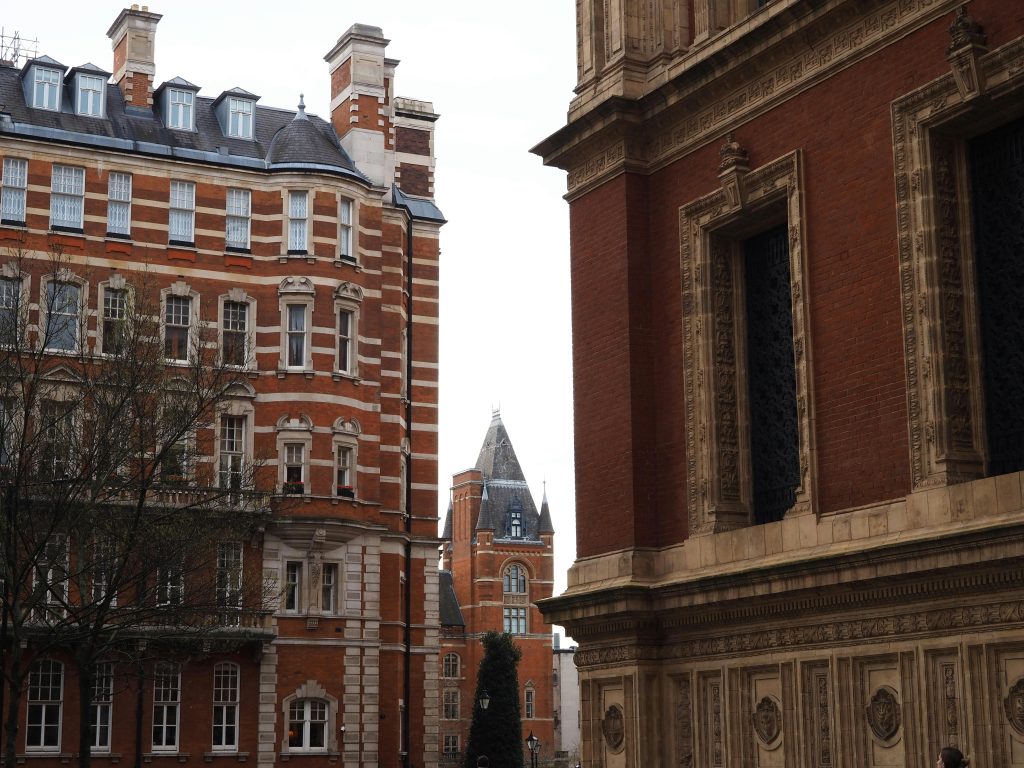
Getting around without thinking about it
High Street Kensington station — District and Circle lines — is two minutes from Cheniston Gardens, with direct trains to the West End, the City, and Canary Wharf without changing. Gloucester Road, ten minutes on foot, adds the Piccadilly line, which is the one you want for Heathrow.
The honest summary
Kensington’s reputation is grander than the day-to-day experience of staying here, which is the nicest possible thing we can say about it. Cheniston Gardens itself is unremarkable to look at and easy to overlook — which is rather the point of a quiet residential street two minutes from one of London’s best-connected stations. The grandeur is around the corner when you want it, and absent when you don’t.
Read more: Where to Eat in Kensington: A Food Guide for Guests at The Cheniston and 48 Hours in Kensington: How to Do London Properly. Or view The Cheniston’s apartments